

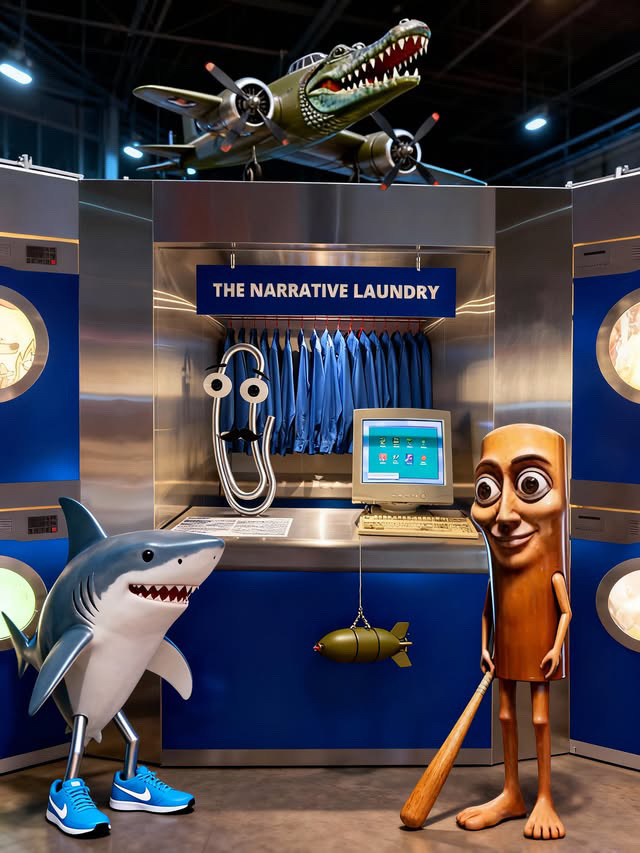
Scrolling through social media nowadays means encountering strange chants like “Tung tung tung sahur. Tralalero Tralala. Bombardino Crocodilo.” To older generations, they might register as playground gibberish. But for millions of Generation Z (Gen Z) and Generation Alpha (Gen Alpha) users consuming this content daily, these AI-generated “Italian brainrot” memes represent something far more complex.
These deliberately absurd creations feature grotesque, surreal characters, beings with bulging eyes and cactus bodies, that deliver disturbing messages beneath their playful veneer. In one widely circulated clip, a character “Bombardino Crocodilo” is described as “a flier alligator that flies around bombing children in Gaza, doesn’t believe in Allah, and loves bombs.” This example alone demonstrates how memes, once simple images portraying kittens with humorous captions shared for entertainment, have evolved into sophisticated tools for political messaging.
The “Italian brainrot” phenomenon dates to January 2025, when TikTok account @eZburger401 posted a video featuring a blue shark wearing Nike sneakers. The account was subsequently banned due to accompanying audio containing profanity and blasphemy in Italian, yet the meme exploded.
Within weeks, an entire universe of characters was created: Ballerina Cappuccina (a ballerina with a cappuccino cup for a head) and Bombardino Crocodilo (a crocodile-bomber hybrid, and dozens more, each with elaborate AI-generated backstories) were among the most viral.
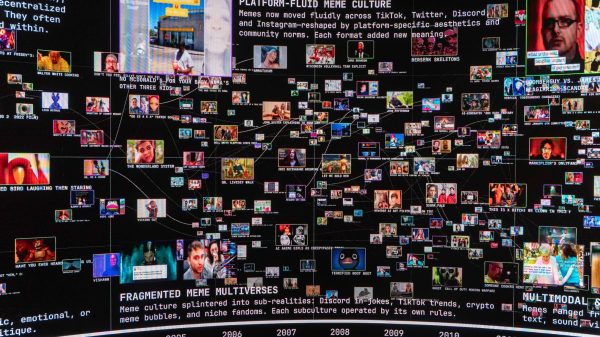
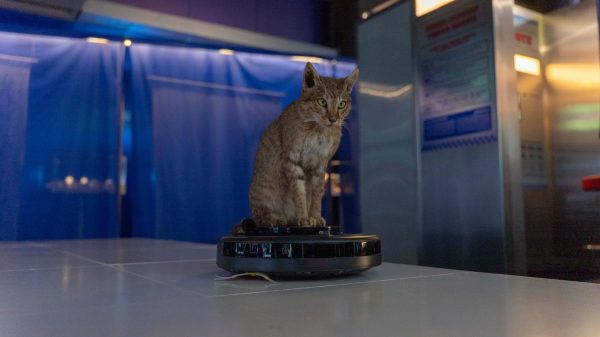
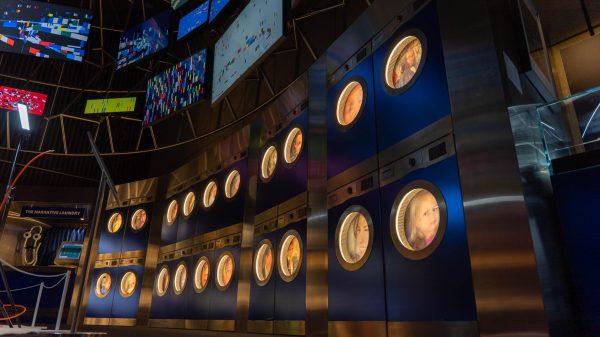
The transformation of memes from harmless content into vehicles for political messaging is apparent at the The Media Majlis Museum “Memememememe” exhibition at Northwestern University in Qatar (NU-Q). Curated by Jack Thomas Taylor and Amal Zeyad Ali, the exhibition applies scientific and colonial measurements of mass, length, time, and volume onto the chaotic world of memes. The exhibition displays different kinds of artifacts, such as washing machines, an old computer, and a cat in a robot vacuum. These are objects that appear fun and whimsical, yet serve to illustrate the exhibition’s central theme about digital weight and influence, as seen by the “Bombardino Crocodilo” character.
One of the installations features a pile of feathers, which illustrates the memes’ deceptive power. “On its own, a feather is light, like a meme,” Taylor said. “But when you start putting all of them together, a kilogram of feathers is still the same as a kilo of anything else. But there’s just a lot more of them.”
The feather metaphor captures something essential about modern digital influence. A single meme appears weightless, easily dismissed as harmless fun. Yet collectively, they possess measurable mass, the same weight as steel, but in vastly greater numbers.
“I see my younger siblings consuming this content for hours,” said Ainur Yekpin, a communication sophomore at NU-Q. “It’s just entertainment, but I think that’s what makes it so effective.”
As Fortune magazine noted, Gen Z’s embrace of the Italian brainrot content, described as “unproductive and pointless,” may be precisely the point. The apparent meaninglessness provides perfect camouflage for more sinister messages, allowing controversial content to spread under the guise of absurdist humor.
But at what point does a meme become a movement? Recent viral campaigns demonstrate that this transformation is already underway. Political power is no longer solely measured in battalions or GDP. It is now measured in engagement metrics, which have become an equally significant indicator of influence. Research shows that political memes have become tools for mobilization, with a Pew Research Center study finding that 37% of Twitter users post humorous content or memes touching on political issues. Likewise, Massachusetts Institute of Technology’s (MIT) research showed that false information is 70% more likely to be retweeted on Twitter (currently X) than true information, with political news showing the most prominent effects. These findings show how meme-based political movements can mobilize millions and shape electoral outcomes, demonstrating the impact of digital content on real-world politics.
The brainrot memes that are consumed every day spread through sophisticated algorithms and viral trends, creating an effective form of digital propaganda. Perhaps the most important measurement is not the weight of individual memes, but our collective capacity to think critically about the digital content that increasingly shapes our shared reality.


