

On July 24, 2023, 14-year-old Rizwana was brought to Lahore General Hospital with extreme signs of physical trauma and in need of urgent surgeries. Soon, representatives of media outlets stationed nearby started herding into the hospital in a desperate need of answers, which, for them, were best revealed through unfiltered and intrusive pictures. While the police were still in the process of filing a First Incident Report (FIR), dozens of images of an incapacitated and heavily injured teenage girl had already flooded TV screens and mobile phones across the country.
As with harrowing cases of abuse, viewers had an endless list of questions sprawled all over social media. Interviewing Rizwana’s family, media outlets broadcast that she had been working as a domestic worker in the house of a civil judge in Islamabad for 10,000 Pakistani rupees ($34) a month, where she endured six months of abuse and torture.
Not long after the filing of the First Incident Report (FIR), Pakistani mainstream media started reporting widely on this case using videos of an injured Rizwana and her grieving parents and coined it the ‘Rizwana Case,’ a name that became ubiquitous in daily news conversations, courts, police constables, and human rights conferences. While the media justified their intrusive methods by claiming they aided swift accountability, one question remained unanswered: What was the name of the perpetrator?
The case of Rizwana is symptomatic of a broader problem in Pakistani media reporting of domestic workers: disrespect for the dignity of the victims of torture and evasion of accountability of the perpetrator. Professor Shakeeb’s project, “Unveiling the Tormentors,” seeks to shift this focus by reframing the media narrative to spotlight the perpetrators and reshape how such cases are covered.
From the Horse’s Mouth: The Treatment of Domestic Workers in Pakistan and their representation in the media
“For my friend who was beaten by her employer and asked about it in explicit detail many times by eager reporters, the violence never stopped.”- Mustafa
The informal economy in Pakistan spans most urban communities, with domestic work being one of its most prominent elements. According to the International Labor Organization (ILO), there are approximately 8.5 million domestic workers in Pakistan. This number translates to every fourth household in Pakistan having domestic help, with 264,000 of the domestic labor force comprising children. While the Punjab Domestic Workers Act (2019) outlines protections such as the signing of a contract, minimum wage, and age restrictions, the informal nature of the economy makes enforcement a bureaucratic predicament. As such, long hours of work, poor living standards, and a lack of legal protection make domestic workers vulnerable to abuse and torture from their employers.
A prominent case example of the abuse of domestic workers is that of Zohra, an 8-year-old girl illegally employed as a domestic worker in Rawalpindi, Pakistan. who was killed by her employers for releasing their pet parrot in June 2020. The media reported widely on this case with particular emphasis on the gory and inhumane conditions of the victim.
Shakeeb Asrar, an assistant professor in residence at Northwestern University in Qatar’s Journalism and Strategic Communication Program, highlighted the particular use of sensationalism in this case and many others by Pakistani media to attract viewers. In his special exhibition at the Rawabet Conference Series ‘Shaping AI-Empowered Future of Knowledge, Scholarship, and Creativity’ at Northwestern University in Qatar, his installation displayed the media’s reliance on victim-centered reporting to amass viewers by showcasing newsreels from nationally televised media outlets that had paraded the victims in their destitute condition in front of the camera. Asrar, in an interview, noted that this is a widespread phenomenon in Pakistani media.
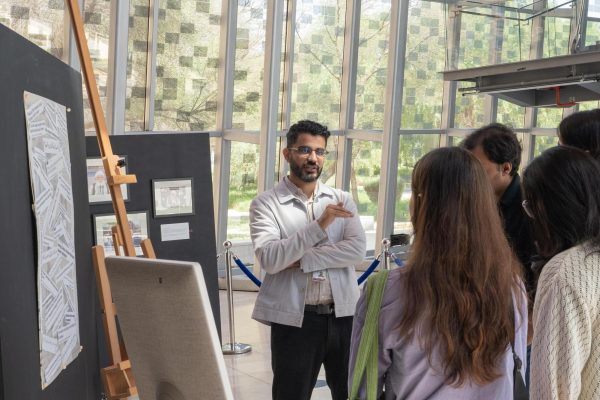
Cognizant of the disrespect of victims and the pervasiveness of torture in Pakistan, Olomopolo Media and Justice Project Pakistan invited six artists to depict torture in Pakistan for a special exhibition on the 2023 International Day of Torture. Selected as one of the artists, Asrar dedicated his project to portraying how media reporting of domestic torture cases shapes conversations and perceptions on torture. His research on cases of torture in Pakistan reveals a harrowing truth: torture cases are almost always represented by the victim’s name. The Zohra case or Rizwana case was repeatedly used as a term to define the case.
“The victims become the poster children of the case,” he said. Even more so, these victims are not given any respect or dignity in the reporting. As Asrar stated, “the news would show close-ups of the injuries while they were still in hospitals.”
Mustafa, a 21-year-old domestic worker in a neighbourhood in Lahore, claimed that he was indirectly aware of this reality. A friend working in a house in a nearby neighborhood was beaten and eventually became the target of local media reporters trying to catch an interesting story. “They surrounded her and asked her personal questions while the doctor was still stitching her up,” he said.
On addressing the impact of reporting such as this, Mustafa narrated how, for his friend who was severely impacted emotionally by the violence, every time the media would ask intrusive questions and report on it, it would seem like it was happening all over again. “The violence never stopped for her,” he said.
However, the legal implications of the media’s invasiveness cannot be disregarded. The vulnerable nature of domestic workers makes respect for their privacy and fulfilling journalistic pre-requisites, such as asking for consent, an optional procedure in the minds of media news reporters. Most recently, in December 2023, the Lahore High Court reiterated the Prevention of Electronic Crimes Act (2016), which bars individuals from invading the privacy of citizens, especially in media reporting. Nevertheless, domestic workers, who are often minors and individuals with little knowledge of legal recourse, never resort to pursuing action against media outlets. This has created a culture of victim sensationalization, as Asrar highlighted, which forgoes harm to the dignity and respect of domestic working victims of torture in the pursuit of arousing public interest and awareness on a case.
‘AI & (In)Justice: Unveiling the Tormenters with AI’
“There is no distinct type. The perpetrators may come from our everyday lives. They may be people we know or are friends with.”- Shakeeb Asrar
In February 2025, a couple in northeast Pakistan murdered a 13-year-old girl, who worked as a maid at their house, for allegedly stealing chocolate. While the identity of the couple is shrouded, the name of the victim has become the forefront of campaigns to stop violence against children and end child labor. Iqra succumbed to her injuries and became the subject of #JusticeforIqra hashtags across social media.
In his project, Unveiling the Tormentors with AI, Asrar addressed another crucial facet of media reporting: that it seldom provides information on the perpetrators. This pattern, he said, can be seen not just in cases involving domestic workers but in instances of domestic violence or assault as well. While the structural cause for this is unclear, he stated that this can be attributed to the political will and, often, financial control that employers of domestic workers hold. Even when the perpetrator has been proven guilty, Asrar pointed to the fact that they are afforded privacy. “Their face is covered by a cloth or blocked,” he said.
Additionally, his research pointed to the pervasiveness of these narratives since they are brought forward by dominant media outlets such as Geo News. This, in turn, influences how the case is perceived and referred to across all forms of media. In the case of Rizwana or Iqra, each case was initially named as such by media outlets and later became common on social media in hashtags or commentary.
In pursuit of bridging this disparity in media reporting and “flipping the narrative” by focusing on the perpetrators rather than the victims, Asrar’s project, which is being used as a digital campaign by Justice Project Pakistan, used artificial intelligence to formulate fictional, however realistic, representations of the perpetrators of torture. The exhibition was made more interactive by including a note on the perpetrators’ respectable nature at face value. Much like the wife of the civil judge who abused Rizwana, the descriptions of these individuals below the AI-generated image presented them as dignified members of the community. As he stated in the interview, “The perpetrators may come from our everyday lives. They may be people we know or are friends with.”
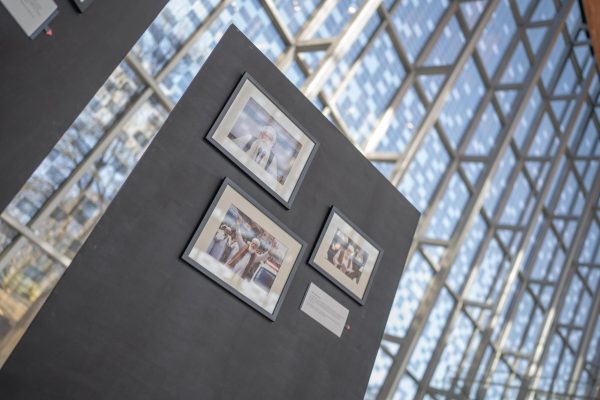
However, a sliding paper behind the note displayed the charges against them: abuse, torture, and blatant acts of inhumanity in the privacy of their home. Campaigns such as these, Asrar noted, are instrumental in preventing further harm to the dignity of victims while also placing emphasis on the actions of the perpetrators. This is especially crucial since media coverage relies on shock value and seldom provides long-term coverage of the trial and conviction. A shift in focus at the time of initial reporting of the case to the perpetrator would, then, bring and maintain focus on the torturer rather than the victim.
Asrar also noted the example of Sharmeen Obaid Chinoy, a famous Pakistani director whose documentary “Saving Face” on acid attack victims won an Oscar in the Best Documentary category, making her the first Pakistani to win an Oscar. The publicization of the documentary and her triumph at the Oscars brought attention to the plight of acid attack victims, prompting the 2011 Acid Control and Acid Crime Prevention Bill, which stipulated more stringent punishments for perpetrators. This example is crucial in exploring how the media can be an accomplice to the crime by harming the dignity of the victim, but it can also be a harbinger of structural change.
Hence, there must be a larger push, one that Asrar and Chinoy contribute to, for a legal and news climate in Pakistan that places the dignity of the victim on a higher pedestal than that of the perpetrator. There must be a shift in how victims are portrayed so that they may move beyond their victimhood, and the violence can finally stop.