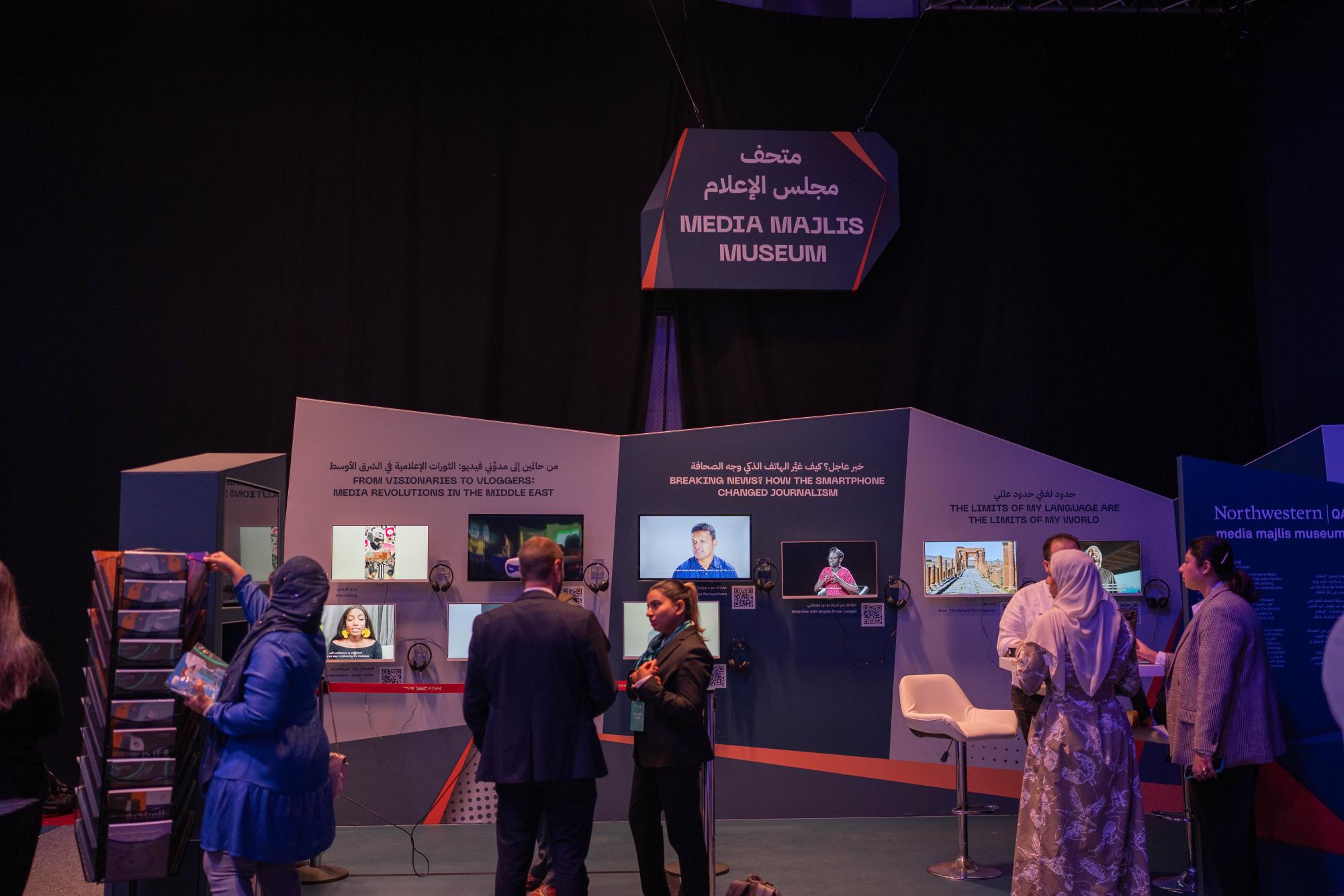
At the 12th edition of the World Innovation Summit for Education (WISE), where global policymakers and educators were debating the future of learning in an AI-driven world, Northwestern University in Qatar (NU-Q)’s Media Majlis Museum stood out with a booth that demonstrates how technology can deepen, rather than dilute, human values.
The booth titled “Media, Meaning, and Human Values” showcases how the museum uses digital tools to explore memory, identity, and cultural representation in the Middle East.
“Considering that we’re part of a media university, we examine the different topics that we pick from the lens of media communication and journalism,” said Safa Arshad, manager of Audiences and Community Outreach at the Media Majlis Museum.
A centerpiece of the booth is a virtual reality experience on Palestinian displacement, which immerses visitors in a reconstructed memory landscape. Organizers describe the approach as designed to prompt emotional engagement and spark discussions that extend beyond the summit floor.
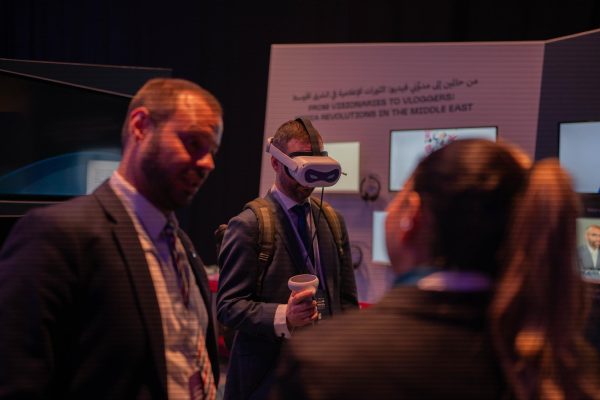
Dariya Utepkaliyeva, a communication junior at NU-Q, who assisted with the museum’s VR installation during the “Metawhat” exhibition in 2024, recalled how powerfully visitors reacted to immersive storytelling.
“I was assisting people with the VR section, and while I was helping them, I was also learning from them,” she said. “Before putting on the VR set, they wouldn’t really have expectations, but after the immersive experience, they always had positive, expressive reactions. You could see on their faces how they’ve learned something new or expanded their initial knowledge through a more engaging tool.”
For Utepkaliyeva, these moments revealed why such independent, physical spaces matter in a hyper-digital age driven by the attention economy. “Most of the students who visited us were students mostly from Education City. They were from so many different backgrounds, and for those who didn’t know in detail what was happening in Palestine at the time that year, VR was a great way to learn,” she added.
But while the installation has drawn steady attention, it also raises broader questions that echo through the summit: Can immersive technologies truly support human-centered education, or do they reduce complex realities to consumable digital experiences?
Journalism sophomore Aiganym Akhmetova believes the key lies not in replacing human storytelling but in strengthening it.
“I really support having technology help human-centered storytelling because that way AI is not writing the stories for us,” she said. “We don’t have to critically think about the ethical implications of using VR, unlike AI.”
Akhmetova noted that young people at the booth were struck by how much they could learn through presence-based media.
“Humans always need POV shots to get a deeper understanding of something that’s hard to imagine. For example, a 10-second video can say a lot more than what we can say through a 500-word essay,” she said.
In line with this approach, the Media Majlis Museum embraces a participatory model that resists fixed narratives. “Our exhibitions are not narrow in focus,” Arshad said. “We encourage dialogue. We want people to feel empowered to be part of that dialogue. We’re not developing an authoritative narrative for them.”
This commitment to two-way engagement plays out in Media Majlis Museum exhibitions, where students and visitors navigate everything from AI-powered portrait robots in “Ai or Nay? Artificial vs. Intelligent” in 2025 to immersive journeys into the shifting landscape of Arabic identity and influencer media in “From Visionaries to Vloggers” in 2020.
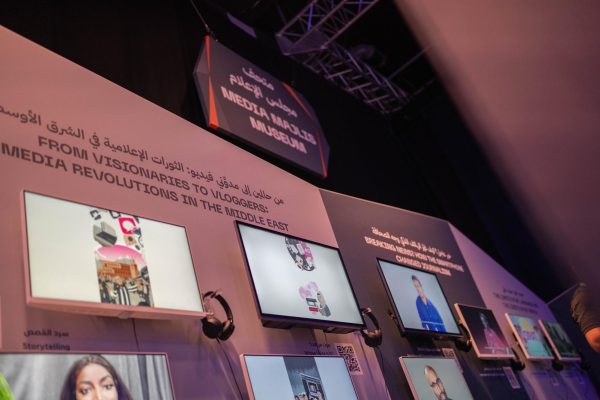
The result is a gallery space that functions less as a static display and more as a dynamic forum: hands-on interaction and personal stories that invite debate, challenge assumptions, and open up new possibilities for what technology and media can achieve in education.
By bringing selected experiences from past exhibitions to WISE 12, the Media Majlis Museum not only illustrates how immersive media can enliven classrooms but also actively demonstrates how technology, when used with intention, cultural awareness, and critical reflection, can enrich dialogue and learning rather than diminish human-centered values in education.