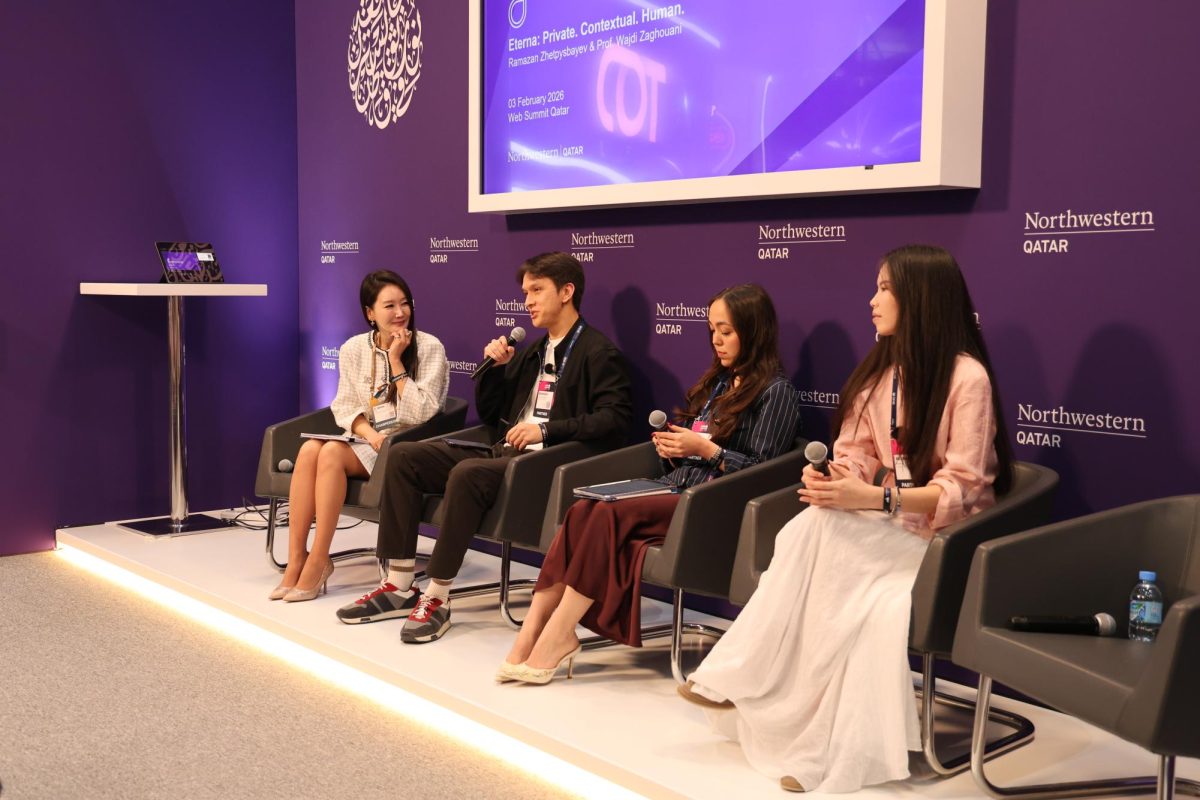
Fresh Global Media Players Symposium, a gathering of international scholars and guests from the media industry to address the questions of global communication power took place at Northwestern University in Qatar (NU-Q) last Thursday on October 29.
The symposium featured three research sessions with nine scholars from around the world and a fireside chat with Elie Habib, CEO of Anghami and OSN+. The sessions were built around the question of disruption: What is disrupting the digital ecosystem? and What do these disruptions tell us about changing configurations?
“The main idea behind the symposium is that the global media landscape is changing all the time,” said William Youmans, an associate professor in residence at NU-Q and one of the symposium organizers. “It’s important to understand new developments and to think about how they relate to the recent history of global media.”
The event was originally scheduled to take place last year, 10 years after NU-Q’s 2015 Fresh Global Media Players symposium. The 2015 edition examined the redistribution of global communication power and led to a section of the International Journal of Communication. However, it was postponed to October 2026 due to regional geopolitical ties, according to the symposium organizers.
“We were fortunate then to bring together scholars,” said Joe Khalil, a professor of global media at NU-Q and co-organizer of the symposium, in his opening speech. “A decade later, many of those questions remain and even the media landscape around them has changed dramatically.”
Scholars presented research that explores different aspects of the changing media landscape, from international news coverage to investigative journalism in East Africa.
“This kind of gathering really reflects the kind of work that we’re doing at NUQ,” said Marwan M. Kraidy, Dean and CEO of NU-Q in his opening speech. Northwestern University in Qatar has “the best and largest” cohort of faculty members, doing work in media industries in relation to anywhere in the world, according to Kraidy.
The first module, Geopolitics of Digital Media, examined how digital platforms redistribute power and access to information with three speakers: Dani Madrid-Morales and Myrtle Ziwei Zeng of the University of Sheffield from the United Kingdom, and Joan Letting of Simon Fraser University from Canada.
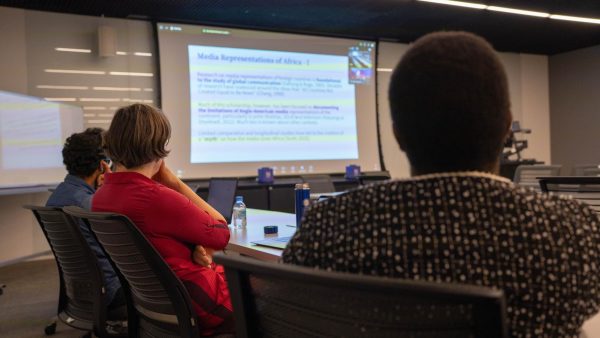
Morales presented global and African news channels and the reconstruction of media laws on platforms such as YouTube. Zeng’s research paper focused on TikTok refugees and the search for belonging. The third speaker, Netting, examined topics of epistemic strategy and the rise of independent investigative media in East Africa.
“I haven’t seen any conferences or panels with focus on media or communication specifically like this before,” said Zeng. The symposium sparked her interest because of the theme of global media. “My research is in how people change from a platform to another one, so, it’s a very international and a global phenomenon.”
The second panel, Monetization and Business Models, highlighted how investment, interdependence, and emerging business models are reconfiguring established centers of media power through “shadow” media networks to Chinese investment in global video games and India’s digital-first independent music sector.
The speakers for the panel featured Swapnil Rai from the University of Michigan, United States, Po-Hsi Wudon from the University of Westminster, United Kingdom and Gowreesh V.S. from Jawaharlal Nehru University, India.
Rai’s research focused on the mechanics of short-form Chinese micro dramas, and how media flows highlight critical regulatory and policy gaps regarding predatory data extraction. Wu investigated how the influx of Chinese private capital into Western video game studios influences game development. Lastly, Gowreesh V.S. examined independent musicians in India and the need for balancing algorithmic platform demands to preserve creative autonomy.
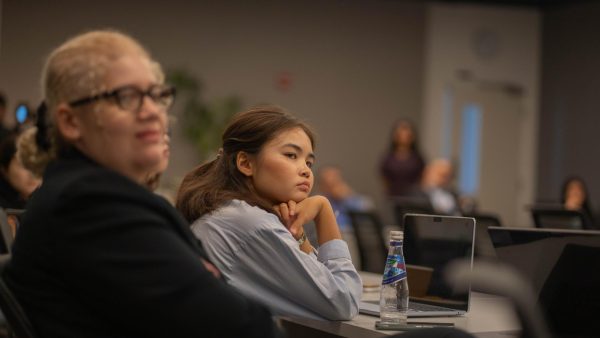
“I thought it was very interesting how the platforms were changing, and it’s not just about one medium,” said Aiganym Akhmetova, a third-year journalism student at NU-Q. “I think that one of my favorite presentations was about the short form content, because it’s such a relevant issue right now.”
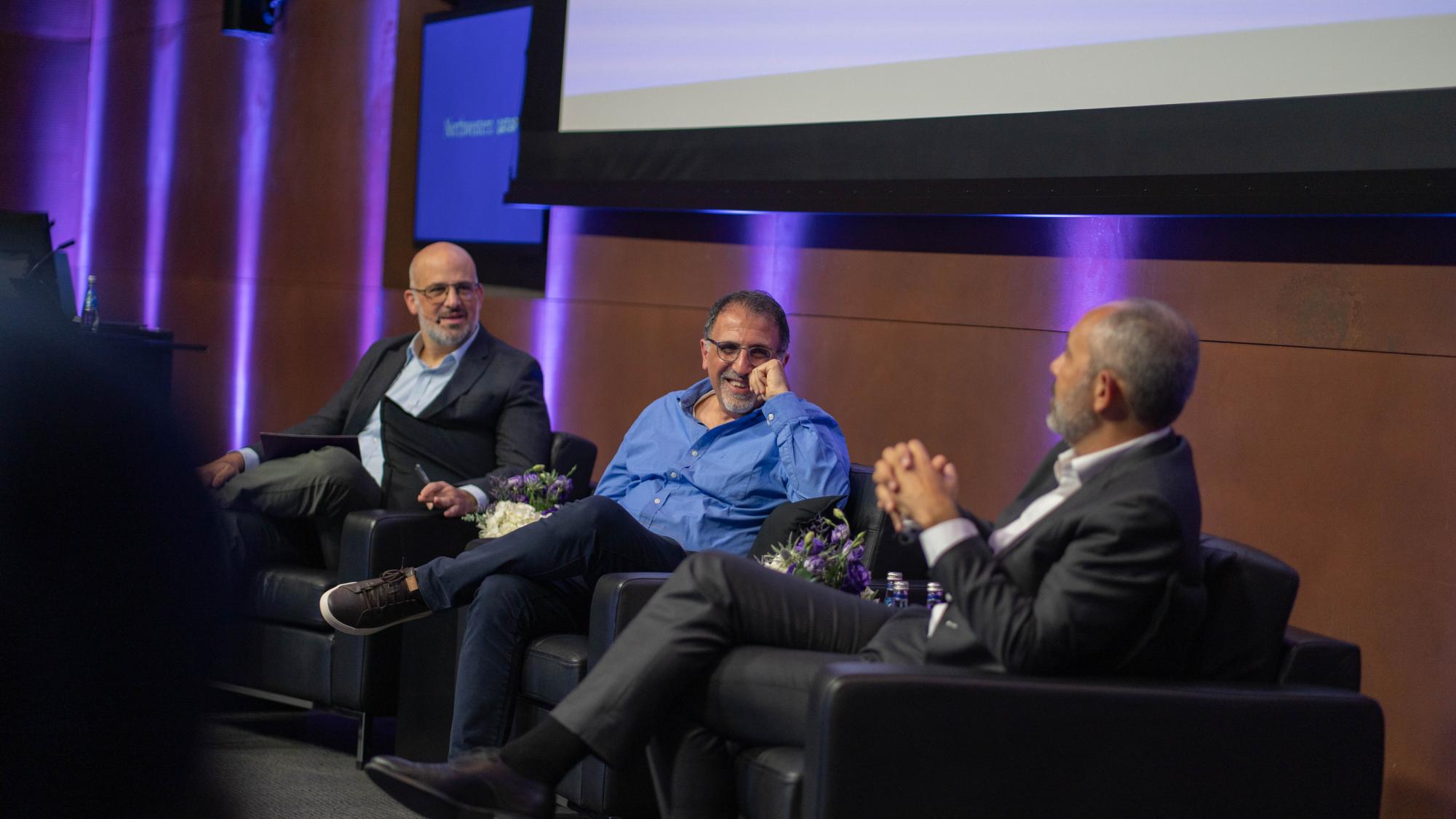
The fireside chat included an open discussion panel between the organizers of the symposium and Elie Habib. It explored the growth of the music platform Anghami, from its launch as Middle East and North Africa’s first legal streaming platform to its merger with the broader entertainment ecosystem encompassing both music and premium video via OSN+.
The discussion highlighted the unique regional challenges of building this infrastructure, including overcoming piracy, establishing local payment systems, educating consumers and artists, and cultivating local talent. “I wanted to be an entrepreneur because that drove me to the whole idea of creating something of nothing,” Anghami said during his presentation.
The third panel, A Regional Outlook, concluded the symposium, featuring Kay Dickinson of the University of Glasgow; Najat Alsheridah, an independent scholar based in Kuwait; and Mohammed Mohammed of LUT University. The session addressed Netflix and Kuwaiti television cultures, alongside participation, tradition, and cultural barriers in Middle Eastern and North African esports.
“This is about bringing the community together to test ideas and to brainstorm,” said Youmans. “But for students, it’s a chance for them to learn about other parts of the world, and to see also what scholars should entail.”
This symposium is an event that not only takes stock of the past 11 years since the initial symposium, but also ideally shapes the conversation regarding communication moving forward, according to Kraidy.